


A hotel management company runs the day-to-day operations of a hotel on behalf of the owner. They hire and train staff, manage budgets, drive revenue, and keep the property aligned with brand standards.
The largest in the US manage hundreds of properties for institutional investors who want hotel cash flow without operational complexity. The biggest, Aimbridge Hospitality, manages 772 hotels for outside owners in the US and about 1,000 worldwide.
Hotel owners are leaning on management companies harder in 2026 than they have in years. The AHLA’s 2026 State of the Industry Report points to labor costs, profitability pressure, and rising guest expectations as the issues that keep showing up in every conversation I have with owners and operators.
This guide covers who the major management companies are, how they make money, how contracts work, and how to pick one.
This guide was created from interviews I’ve done with leaders and experts in hotel management, including:
- David Chu, Senior Vice President at GAM Hospitality
- Mark Keiser, Chief Development Officer at EOS Hospitality
- Scott Curran, Chief Operating Officer at Reneson Hotels
- Susan Barry, Principal at HIVE
First, let’s start with the basics….

What is a hotel management company?
A hotel management company manages the operations of a hotel or group of hotels on behalf of the hotel owners.
This includes overseeing the hiring, training, and management of employees, implementing marketing and sales strategies, managing budgets and finances, and ensuring the overall quality and profitability of the hotel.

How are hotels managed: the hotel landscape today
Hotel management companies are perhaps best viewed in the context of the broader hotel ecosystem today. Here’s how Susan Barry, Principal at HIVE and a former Starwood Hotels executive, describes it:
- “Brands are the big signs that you see on the outside of a hotel. They are the IHGs, Best Westerns, Wyndhams, Hiltons, and Marriotts of the world. They license the use of their name and playbook for running a hotel to an ownership group.
- “The ownership group is the investor that puts up the money and owns the real estate. They’re running a real estate business, but because hotels are cash-flowing entities, they’re also making money on the day-to-day operations. Brands have a very intricate playbook for how hotels should be operated and usually, if not always, require the owner/investor to hire a professional hotel management company to run that hotel on their behalf.
- “Hotel management companies are the operators. They hire the staff, run payroll, and ensure compliance with local, state, and national laws. They do everything required to operate the hotel according to the brand’s playbook because the owners are focused on real estate investing.”
“The way I see it, brands guide the hotels on standards and consistency,” says Scott Curran, COO at Reneson Hotels, which is both a hotel owner and management company. “It’s our responsibility to make sure we’re representing brands in the right way, make sure that we’re operationally running in the right way, and doing what we need to do to so that guest has so much fun at our property in Napa that when they book a vacation in New York, they’re thinking, ‘I want to stay at Hilton Garden Inn, too.’”

What do hotel management companies do?
Hotel management companies are responsible for overseeing the operations of a hotel on behalf of owners, in compliance with brand standards as outlined above.
Hotel management services typically include:
- Hiring and training staff
- Leading and managing these associates day-to-day
- Driving demand through marketing, distribution, sales, and revenue management
- Converting demand into profits through efficient operations and appropriate cost controls
- Ensuring guest satisfaction
- Managing the hotel’s finances
Ultimately, all of this is done to ensure the hotel business is as profitable as possible for the hotel owners.
“Third-party hotel management companies create convenience for hotel owners,” David Chu, SVP of GAM Hospitality says. “Investors don’t want to get bogged down by the operational nature of hotels. They will tell their managers, ‘We bought this hotel and want you to run it for us.’ They may not know anything about labor, operations, or hotel accounting. They just want the manager to come to them on a monthly basis and tell them what’s going on and where they need to improve and invest.”
While the responsibilities of management companies outlined above are true for many firms, David pointed out that there are many different types of hotel managers. “Some management companies specialize in a specific area, such as labor, and others are specialists in operations. And then there are companies that have robust executive teams who have seen it all and help with turnarounds.” In David’s experience, many hotel owners turned to their management companies for advice on asset management, and sometimes these relationships became advisory only and don’t involve operational management.
Hotel management companies have a challenging job, observed Brian Proctor, Principal at Leeds Hospitality Group, who formerly ran operations in executive roles at Starwood Hotels, Evolution Hospitality, and BridgeStreet. “Third-party hotel management companies are there to protect the owner’s asset value. It’s a very tough job because you’re always managing someone else’s assets on behalf of them while trying to maintain brand standards. At some point, there will be a pull from one of those sides. Brands may want to get you to adopt a new initiative, but owners may not want to spend money on it. You need to be a good intermediary.”

How hotel management companies make money
Hotel management companies typically make money by charging a percentage of the hotel’s revenue as a management fee. “3% of topline revenue is a good rule of thumb to keep in mind,” Susan advised.
Sometimes, it’s based on gross operating income, and David has seen management agreements range from 3-5% of gross operating income, with incentives for performance.
“You often get what you pay for with hotel management companies,” added Mark Keiser, Chief Development Officer at EOS Hospitality. “It is often more important how the contracts are structured to incentivize profitability as well as top-line performance. A management contract that is structured as 3% of revenue but little incentive on driving profitability might result in lower actual profits to an owner than paying a total fee of 4% or more that is balanced between a percentage of profits and a percentage of operating profit.”

How hotel management contracts are structured
According to David, most industry participants sign a hotel management contract for a minimum of 3-5 years and then have a renewal clause for another 3-5 years that’s subject to review and renegotiations.
Here’s former hotel owner and asset manager Randy Efron explaining how hotel management agreements are typically structured:
How AI and technology are changing hotel management
AI may be the biggest change in hotel operations since revenue management software arrived in the late 1980s and 1990s.
The largest management companies are building their own tools. Aimbridge launched its Aimbridge Intelligence reporting platform for owners in 2024. In September 2026 it added LIFT, an AI-assisted labor forecasting tool. Highgate runs a data platform it calls Highgate Intelligence. Pyramid gives owners its in-house NEO analytics platform. These companies also buy software. Aimbridge, Pyramid and Highgate have all used Actabl products for labor scheduling or business intelligence.
The gains are real. A peer-reviewed study of Carlson Rezidor’s pricing system found 2 to 4 percent more revenue at hotels that followed its prices. Labor software vendors report cuts in overtime, and even small gains add up over a five-year contract.
Most operators are still early. In the State of Hotel AI 2026 survey, 24 percent of hotel leaders said their AI investment had paid for itself. Another 28 percent said it was too early to tell.
The owners I talk to now ask about a manager’s AI roadmap before they ask about brand experience.
If you’re choosing a management company in 2026, ask three things. What have they built themselves? What platforms do they pay for? What results can they show at hotels like yours? Treat AI capability as one criterion alongside operational track record and brand experience.
10 of the biggest hotel management companies in 2026
Here are the ten largest hotel management companies by properties under management in the United States:
#1: Aimbridge Hospitality
Aimbridge is the biggest hotel management company by property count.
In their words: “We’re passionate about connecting great people to great experiences in exciting destinations. And with more than 1,100 hotels in over 20 countries, we’ve mastered the art of connection. From the rich diversity of our people and locations to our “people first” approach to business, the Aimbridge experience is like no other – for our customers and our team members. If you’re ready to grow, learn and connect with a team of dynamic colleagues with a passion for excellence, come on in, the door’s open.”
Watch Glenn Haussman talk with Rob Smith, Divisional President of Full Service Hotels for Aimbridge, for a bit of context:
Learn more: Website / LinkedIn page
#2: Hotel Equities
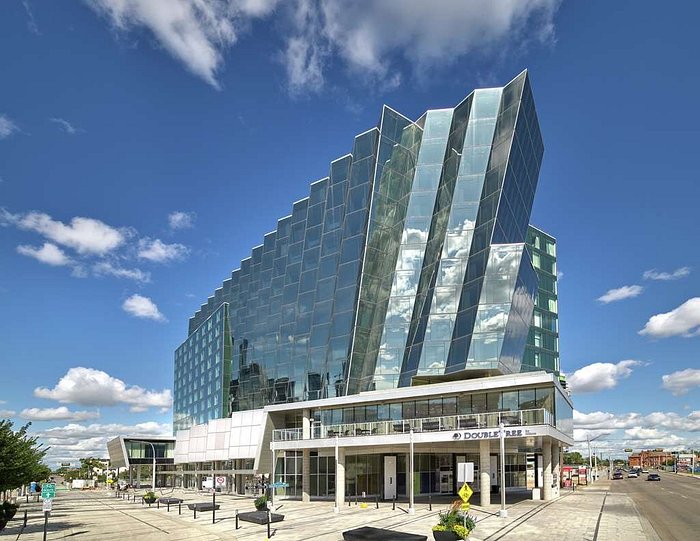
In their words: “Hotel Equities (HE) is an award-winning hotel development, ownership and management company. For over 30 years, our team has collaborated with premier brands and entrepreneurial owners to deliver best in class results. HE is hyper focused on managing upper midscale and full-service hotels in the U.S and Canada. Whether we’re executing ground-up development, re-positioning a property or managing one of the 250+ hotels in our portfolio, HE provides the highest and best value for owners, while prioritizing guest satisfaction and profitability.”
Learn more: Website / LinkedIn page
#3: HHM Hotels

In their words: “HHM, formerly known as Hersha Hospitality Management, is a Philadelphia-based award-winning hotel management and investment company that operates over 240 full-service and select-service hotels across 30 states and in virtually every major hospitality market from coast to coast. HHM is a leading manager of Marriott, Hilton, Hyatt, and IHG hotels, while also operating over 30 independent hotels ranging from The Rittenhouse Hotel in Philadelphia to The Joule in Dallas to The Whitney Hotel in Boston.”
Learn more: Website / LinkedIn page
#4: Pyramid Global Hospitality
In their words: “Pyramid Global Hospitality (“Pyramid”) is a leading hotel management company, operating in the US, Caribbean, and Western Europe. With portfolio revenues exceeding $3 billion, Pyramid manages 220 hotels, resorts, and conference centers, both branded and independent. The firm maintains offices in Boston (Headquarters), Cincinnati, Houston, and London.”
Learn more: Website / LinkedIn page
#5: Highgate

In their words: “Highgate is a premier hospitality investment and management company widely recognized as an innovator in the industry. Highgate is the dominant player in U.S. gateway markets including New York, Boston, Miami, San Francisco, and Honolulu. Highgate also has an expanding presence in key European markets through properties in London, and Barcelona. The company provides expert guidance through all stages of the hospitality property cycle, from planning and development through recapitalization or disposition. Highgate also has a proven record of developing bespoke hotel brands and utilizes industry leading proprietary revenue management tools that identify and predict evolving market dynamics to drive outperformance and maximize asset value. With an executive team consisting of some of the industry’s most experienced hotel management leaders, the company is a trusted partner for top ownership groups and major hotel brands.”
Learn more: Website / LinkedIn page
#6: Concord Hospitality Enterprises
In their words: “Concord Hospitality Enterprises Company is an award-winning hotel management and development company. Through the combined efforts of over 4,000 hard-working and focused associates, Concord offers a unique blend of entrepreneurship, seasoned experience, innovation and technical excellence. These elements create a company equipped to produce above-standard returns, market sustainability and a partnership well worth investing in.”
Learn more: Website / LinkedIn page
#7: GF Hotels and Resorts
In their words: “GF Hotels & Resorts is an award-winning full-service ownership and management company that specializes in hotels, resorts, golf courses, and other related hospitality assets. Since its founding in 1988, GF has operated over 700 properties in 46 states. GF’s expertise includes but is not limited to Sales & Marketing, Food & Beverage, Revenue Management, Information Technology, Human Resources and a complete Accounting System. Currently, GF partners with Hilton, Marriott, Hyatt, IHG, Choice, Wyndham, Best Western, among others, as well as individual properties. With its award-winning approach to maximizing guest satisfaction, GF has been recognized as one of the top management companies in the industry.”
Learn more: Website / LinkedIn page
#8: TPG Hotels
In their words: “At TPG Hotels & Resorts we are driven to deliver superior brand quality, value and service to our guests and owners. People are our greatest assets. TPG Hotels & Resorts is proud of its ability to recruit, train and retain the best hospitality personnel in the business. Nationwide, TPG-managed properties are recognized as great places to work and build a career. TPG Hotels & Resorts supports an entrepreneurial culture by empowering managers and associates to make their jobs rewarding, enriching and fulfilling. Training programs are provided to encourage professional advancement as well as personal success and growth.”
Learn more: Website / LinkedIn page
#9: Davidson Hospitality Group
In their words: “A remarkable thing happens when you bring people together who are driven by a common goal and personal passion to make a difference—they do. Every team member at Davidson Hospitality Group is united behind a singular vision: Delivering hospitality and creating value for every customer, every time. This simple but powerful vision provides the impetus for our approach to value creation, the cornerstone of how we’ve operated for nearly 50 years. It brings a spirit of collaboration, innovation, and hospitality to our select portfolio of clients. It fosters an entrepreneurial management style that allows us to look at each property through the eyes of an owner, and treat each and every property as if it was our own. In the end, it makes a remarkable difference driving top-line revenue and bottom-line results for our property owners.”
Learn more: Website / LinkedIn page
#10: Crestline Hotels & Resorts

In their words: “Crestline Hotels & Resorts LLC manages 123 hotels, resorts, conference and convention centers with nearly 18,500 rooms in 28 states and the District of Columbia. Crestline is among the largest independent hotel management companies in the United States. Crestline manages quality properties independently and under such well-regarded brands as Hilton, DoubleTree, Embassy Suites, Hampton Inn & Suites, Hampton Inn, Hilton Garden Inn, Homewood Suites, Hyatt House, Hyatt Place, Crowne Plaza, Holiday Inn, Marriott, Renaissance, Westin, Courtyard, Fairfield Inn, Residence Inn, SpringHill Suites and TownePlace Suites as well as Private Label/Independent properties.”
Learn more: Website / LinkedIn page

List of all hotel management companies
The ten companies above are the largest third-party hotel managers in the United States today, but there are others to consider.
Here’s the full list we assembled of all of the biggest hotel management companies:
Note: This is a crowdsourced project, so if you notice something outdated or missing, please add a comment on the sheet here.
How to choose a hotel management company
Hotel owners looking to find the right hotel management company for their properties should consider the following:
- Experience with the hotel type, brand, and location you have
- Track record of performance
- Range of services offered (people/HR, marketing, revenue management, technology, etc)
- Fees and contract structure
- Reputation and references
Get to know the team
As with any key business partnership, it’s important to meet with the management companies you’re considering to discuss your goals and expectations. Great management companies will be able to provide you with similar references from other owners and investors whom you can speak with to understand their experience.
According to David, skipping this step of due diligence is a warning sign to good hotel management companies. “We would never work on a project where an owner didn’t really know who we are and just expect us to get started after signing a contract. We want you to know all about us because we’re going to need to work closely with you to deliver the best results.”

Look for brand experience
“If I own the Hilton hotel, I expect my management company to know everything about Hilton’s systems, its rules and regulations to quality assurance, its training, its critical path to opening and closing, its management of personnel, hiring, diversity, HR – all of these things,” David added.
Look for alignment
“There are a lot of questions an owner should ask to uncover whether the management company will be successful in managing the day-to-day,” Mark said. “We believe it is most important to ensure that there is alignment between you and your manager on your vision for the property, your investment objectives, and how you will ultimately measure success. You can then determine who your best partner will be — for a specific hotel or even your entire portfolio – and ensure that the financial incentives are in place so that the manager is appropriately focused in good times and bad.”
Brian agrees. “Hotel management companies have to consider the guest’s interests and the brand’s interests, but ultimately align with the owner’s interest. I learned early on at a management company the importance of aligning yourself with the right owners that understood and had similar goals that you as an operator have. You really have to pick your partners correctly and carefully.”
Look for the right mindset
“When I was a hotel operator, I always tried to manage my hotels as if I owned them,” Brian told me.
“Every decision that I made as a GM, and then eventually as COO, was made by considering 1) Does this protect and enhance the brand 2) Does this take care of my associates 3) Does it take care of my guests, and 4) Does this enhance the value of the hotel as an operating real estate business?”

I hope you found this guide helpful. If you have any questions or suggestions on how I might improve it, please let me know on LinkedIn.
Frequently asked questions
What’s the difference between a hotel brand and a hotel management company?
Brands like Marriott, Hilton, and IHG license their name and operating playbook to hotel owners. Management companies actually run the property day to day. They hire staff, manage operations, and keep the hotel compliant with brand standards. An owner can have all three relationships at once: they own the real estate, license a brand, and hire a third-party manager to run operations.
What’s the difference between a franchise and a third-party hotel manager?
A franchise agreement gives the owner the right to use a brand’s name and systems. A management agreement hands operations over to a professional operator. Most branded hotels have both. They franchise from a brand and contract operations to a separate management company.
How much does a hotel management company cost?
Management fees typically run around 3 percent of topline revenue as a baseline. Some agreements use gross operating profit instead, ranging from 3 to 5 percent. Most include performance incentives tied to profitability.
How long is a typical hotel management contract?
Most contracts run 3 to 5 years with a renewal clause for another 3 to 5 years, subject to renegotiation.
What’s the largest third-party hotel management company in the United States?
Aimbridge Hospitality is the largest by property count. It managed 772 US hotels for outside owners at the end of 2025, according to Hotel Management’s annual survey, and about 1,000 hotels worldwide. Highgate (401 US hotels), Hotel Equities (315) and HHM Hotels (230) are next.
Can a hotel owner switch management companies?
Yes. Most contracts include termination provisions, and owners regularly evaluate operators against performance benchmarks. Switching is operationally disruptive, so it usually happens when performance gaps persist or the owner’s strategy changes.
Do hotel management companies own the hotels they manage?
Some do, most don’t. Pure third-party operators manage hotels for outside owners. Others run a hybrid model where they own a subset of properties and manage the rest. Hotel Equities, Highgate and Reneson Hotels all own some hotels and manage others.


